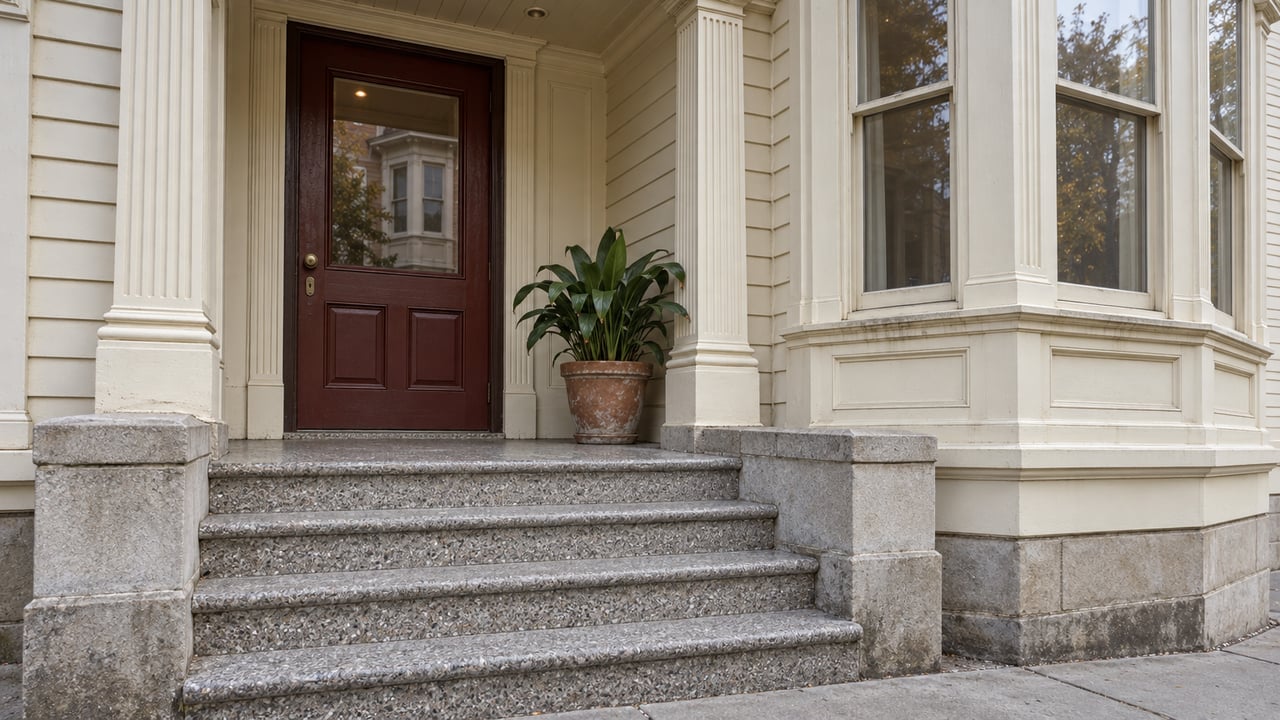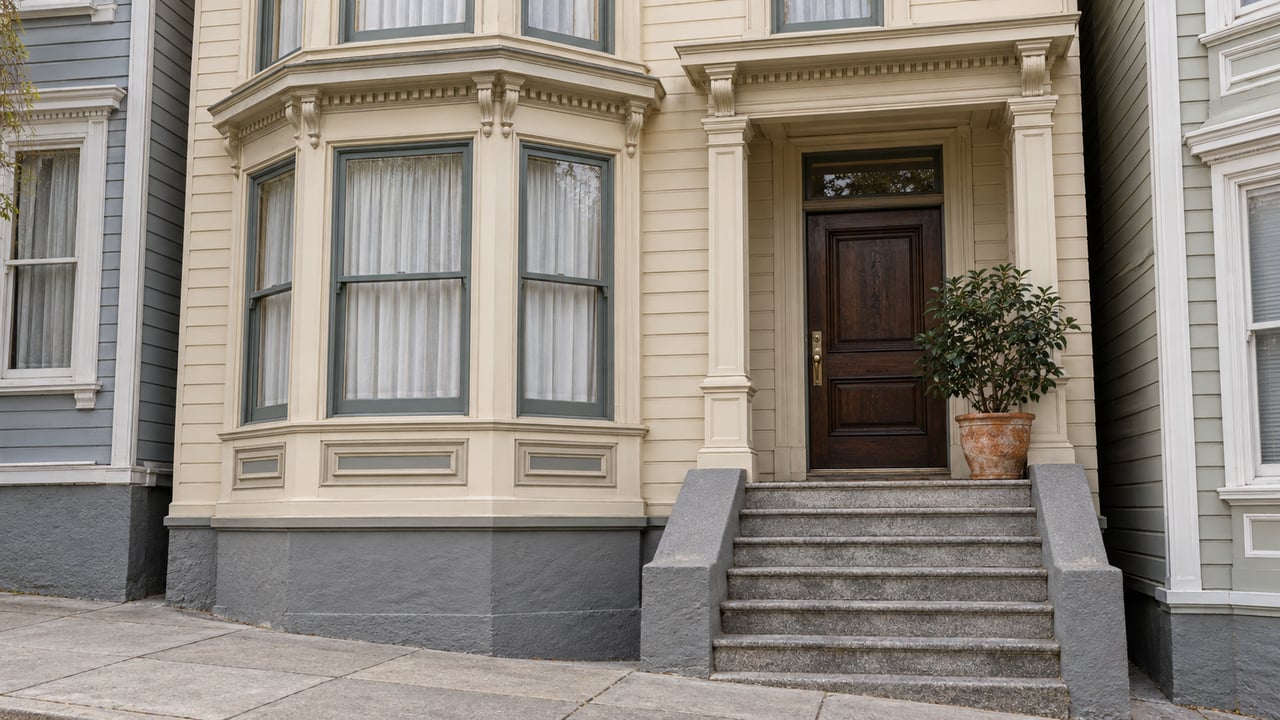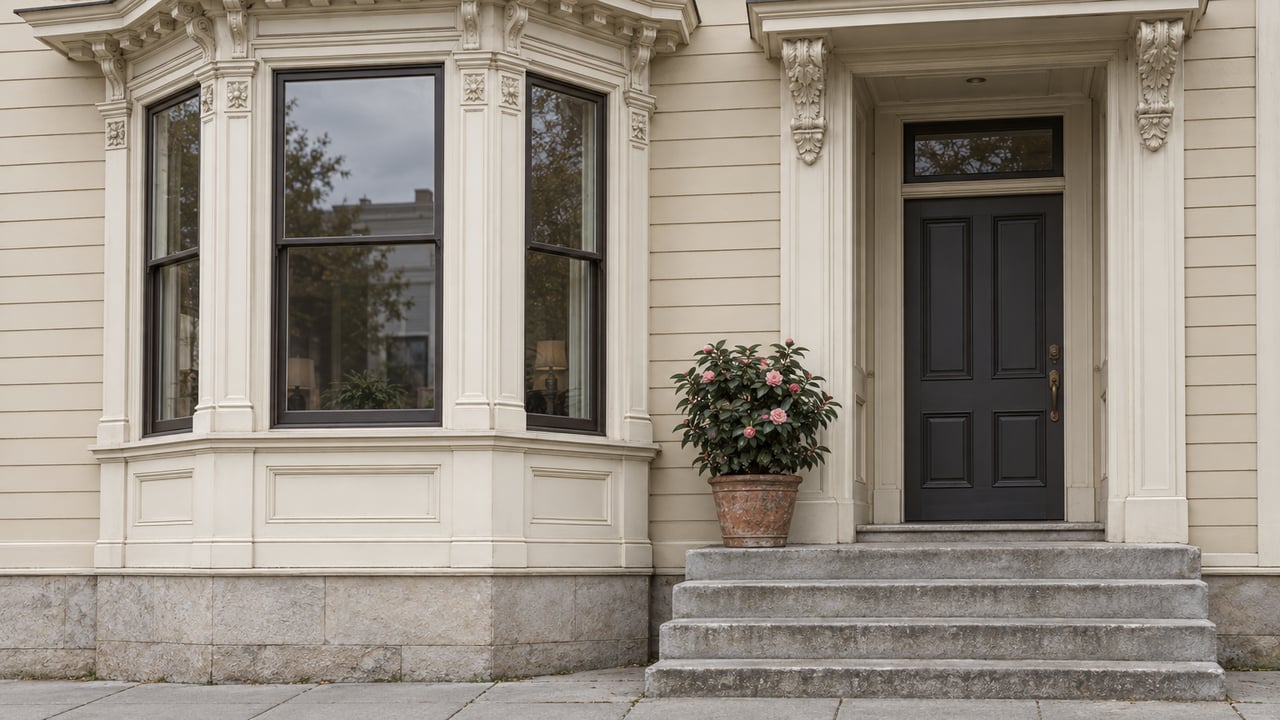
A four-bedroom house on Pacific Avenue listed this summer at $7.5 million. Six offers later, it closed at $12 million, sixty percent over ask, after one month on the market. Three blocks away, another Pacific Avenue address told a different story entirely. 2830 Pacific Avenue went on the market in April 2025 and sat there for nearly a year before closing this past April at its exact asking price of $27.5 million. No discount. No bidding war. Just a full-price close after eleven months of waiting.
Same street. Same neighborhood. Same general window of 2026. Two houses that behaved like they belonged to different cities.
That contrast is the whole point for anyone trying to make sense of what Pacific Heights actually costs right now. The neighborhood does not have one market this year. It has at least four, and they are moving on different clocks.
One Median, Four Markets
Citywide roundups have quoted a twelve-month median for Pacific Heights houses near $7.6 million as of mid-2026, up better than 25 percent year over year. That number is real. It is also almost useless to most people shopping here, because it reflects a top slice most buyers will never touch, the estate-corridor trades on Broadway and Vallejo that pull the average toward the ceiling every time one closes.
A three-month window through Redfin data ending in May 2026 tells a nearly opposite story: a median of $2.4 million across all home types in Pacific Heights, up about 25 percent year over year, with roughly 93 homes sold that May and a median of around 13 days on market. Both figures are accurate. Neither describes the specific house or condo a given buyer is trying to write an offer on.
The neighborhood runs roughly from Van Ness to Divisadero and from Broadway down to California Street. Inside that stretch, the northern estate corridor along Broadway and Vallejo trades in a different rhythm than the denser condo blocks south of California, and both trade differently than the co-op buildings scattered throughout. Michael Tilson Thomas's longtime home on Pierce Street, listed this September for $9.9 million after the late San Francisco Symphony conductor's death in April, sits in that same estate tier as the $56 million sale earlier this year at 2898 Vallejo Street, a property that a trust connected to TelevisaUnivision's CEO had purchased for $11.7 million back in 2013. These are not comparable transactions to a two-bedroom condo listing three blocks south, even though a portal search would lump all of them into the same neighborhood median.
What the Tiers Actually Show
Break the market down by price band instead of by headline average, and the picture sharpens considerably.
| Segment | Recent Days on Market | Sale-to-List Behavior |
|---|---|---|
| $3M–$6M houses | About 10 days | Roughly 7% over asking |
| Homes under $1.5M | About 19 days | Close to list price |
| Co-ops, all price points | 30+ days | Board approval adds its own timeline |
| Estate-tier homes ($20M+) | Months, sometimes off-market entirely | Full ask or private negotiation, little movement either way |
The overall neighborhood numbers back this up. Price per square foot across all Pacific Heights sales hit a decade high in 2026, and the share of sales closing above asking climbed to roughly 53 percent, up from about 36 percent the year before. But those figures are an average of segments that do not behave alike. The $3M to $6M band is where the real competition lives right now, the tier where a well-priced house draws a crowd fast. Homes under $1.5 million move at a noticeably slower pace and tend to close near list, a sign that the entry tier is not seeing the same bidding pressure as the middle of the market. Co-ops are their own category. Only 19 co-op units sold in Pacific Heights over the past year, and they took more than triple the time of everything else to close, not because demand is weak but because fewer buyers are willing to go through a board approval process on top of a standard purchase.
The Condo Math That Looks Simple Until You Run It
On paper, a condo in Pacific Heights looks like the accessible entry point. Single-family homes here are running close to $1,671 per square foot, while condos sit nearer $1,241, a gap of roughly a third. For someone priced out of a house, that math reads like an obvious substitute.
The carrying costs are where that simple story gets complicated, and where it can actually reverse.
Take 2200 Pacific Avenue, a 65-unit tower built in 1963 at the corner of Pacific and Buchanan, with a rooftop pool overlooking the Golden Gate Bridge and a 24-hour door staff. A recent listing there carried monthly HOA dues of $1,551, covering door staff, the pool, grounds maintenance, utilities, professional management, contribution to reserves, deeded storage, and one parking space. Run that out over a decade and the total carrying cost lands near $186,000. Pacific Heights Towers, the 17-story building at Sacramento and Laguna next to Lafayette Park, quotes a wider range of $900 to $1,800 a month depending on the unit, which puts a decade of dues anywhere from roughly $108,000 to $216,000.
Now compare that to a house. Financial planners generally recommend setting aside 1 to 3 percent of a home's value annually for maintenance. On a $2.5 million house, that is $25,000 to $75,000 a year, or $250,000 to $750,000 over ten years, before anything unusual happens with the roof, the foundation, or a seismic retrofit.
Even at the high end of its dues, a well-run condo building can cost less to carry over a decade than the low end of a comparable house's maintenance reserve. That is the opposite of what the per-square-foot sticker price suggests. The condo is not just cheaper to buy. In the right building, it can be cheaper to own, for as long as the building's reserves are actually healthy, which is not something a listing photo tells you.
Where the Substitution Actually Works
The size of the unit determines whether this trade makes sense, not just the price tag.
A 2,000-square-foot-plus condo on Pacific Avenue or along the denser blocks south of California Street can genuinely compete with a smaller single-family house nearby, once a buyer has underwritten the HOA dues, reviewed the reserve study, and confirmed there is no pending assessment for facade or balcony work. That size threshold matters because it is large enough to solve the same living problem a house solves. A 1,100-square-foot two-bedroom does not do that, regardless of how attractive its per-square-foot price looks next to a house's median. It is answering a different question about space, not offering a discount version of the same square footage.
This is also why the estate corridor and the condo corridor do not compete with each other at all. A buyer comparing 2830 Pacific Avenue to a unit at 2200 Pacific Avenue is not making a real choice between two options. They are looking at two entirely different products that happen to share a street name.
What to Underwrite Before You Write the Offer
For anyone seriously weighing a large-format condo against a house in Pacific Heights, California law puts real documentation in front of a buyer before they need to decide.
The reserve disclosure is the document worth reading twice. It is designed to show whether a special assessment is on the horizon, a question that matters more in a neighborhood built largely before 1965, where major systems are aging out on their own schedule regardless of what the HOA statement said five years ago.
If a co-op is on the table instead of a condo, the timeline changes again. The process differs from a standard condo purchase, which helps explain why co-op sales in Pacific Heights take more than triple as long to close as everything else in the neighborhood.
None of this makes Pacific Heights harder to buy into than it looks from the outside. It makes it a market where the headline median is the least useful number in the room, and where the size of the unit, the health of the reserves, and the specific corridor a property sits on tell you far more than the neighborhood name ever will.
If you are trying to figure out which of these four markets your budget and your square footage actually belong to, that is exactly the kind of block-by-block read Govoni Real Estate Team works through with buyers before an offer ever gets written. Reach out and we'll walk through the comps that actually apply to what you're shopping for.
This article is general information, not legal, tax or financial advice. Consult a qualified professional about your situation.